Making sacrifices now can go a long way towards achieving your homeownership goals. Charge card or loans with high rates of interest can harm your credit and are expensive in the long run. Focus on paying down these accounts initially, and you'll see a snowball effect on lowering your financial obligation. Once these accounts are paid off, you can then apply the regular monthly payment amounts towards your down payment cost savings.
Rather, use them minimally (buy gas or a periodic supper at a dining establishment) and pay the balances off immediately. This habits helps strengthen your credit payment history and reveals accountable use to credit bureaus and lending institutions. Many novice purchasers discover they can save much quicker if they increase their earnings.
Even if you work momentarily for 6 months or a year prior to buying a house, the extra earnings might be the boost you need for a good deposit. It's not difficult to buy a home if you do not have much cash saved up for a deposit. Shopping around for the best lender and loan type is an important action.
Likewise, don't forget to tap into down payment support programs provided by your state or city. If somebody provides a financial present towards your down payment, make sure they understand it can not be a loan. Lastly, there's no shortcut to saving for a down payment: It takes some time, discipline and effort.
Putting down more money upfront lowers the quantity of cash you have to obtain, which suggests a lower month-to-month payment. And if you put down a minimum of 20 percent, your loan provider will not require you to buy home mortgage insurance, which likewise decreases your regular monthly costs. On the other hand, if putting down 20 percent will drain your cost savings, leaving you without money for emergencies, it might be better to make a lower deposit.
When you buy a house, you'll likely make a deposit on the purchase, which is the quantity you're not financing with a mortgage. Here's everything you need to understand about making a deposit on a house, including what the minimum deposits are for various types of home loans.
Expect you wish to purchase a house priced at $100,000. If you put $3,000 toward the purchase price, or 3 percent down, you'll take out a home loan for the remaining $97,000. If you were to put down $20,000, your home loan would now be for $80,000, and your deposit would equate to 20 percent of the purchase rate.
About What Percentage Of Mortgages Are Fha
Utilizing the above examples: When you put $3,000 down (3 percent) on a $100,000 house, your LTV is 97 percent. When you put $20,000 down (20 percent) on a $100,000 home, your LTV is 80 percent. LTV is essential since it's how lending institutions describe the optimum loan they will make.
Here's an example: Finley $167,667 $5,000 3% $776. 60 $149. 11 $925. 71 Kerry $200,000 $20,000 10% $859. 35 $66 $925. 35 Note: This example assumes a 4 percent rate of interest. Sources: Bankrate, Radian mortgage insurance coverage calculatorNote that there is a compromise between your down payment and credit score. Larger down payments can offset (to some level) a lower credit rating.
It's a balancing act. For numerous first-time buyers, the deposit is their greatest challenge to homeownership. That's why they frequently turn to loans with smaller minimum deposits. Many of these loans, though, require debtors to purchase some form of home loan insurance. Normally, lenders will need home loan insurance if you put down less than 20 percent.
Consider this: If you save $250 a month, it will take you more than 12 years to accumulate the $40,000 required for a 20 percent down payment on a $200,000 home. Really few mortgage programs permit 100-percent, or zero-down, financing. The reason for requiring a deposit on a home is that it reduces the risk to the lender in numerous methods: Property owners with their own cash invested are less likely to default (stop paying) on their home mortgages.
Saving a deposit requires discipline and budgeting. This can establish customers for successful homeownership. There are 2 government-backed https://consent.yahoo.com/v2/collectConsent?sessionId=2_cc-session_d00d4ad7-4053-4b70-be55-5975608c7f0e loans that require no down payment: VA loans for servicemembers and veterans and USDA loans for qualified buyers in backwoods. There are lots of ways to come up with a deposit to purchase a home.
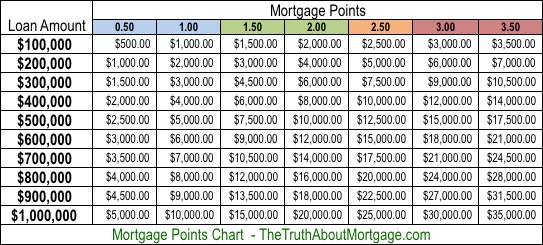
Other sources consist of: Some down payment sources, however, are not permitted by loan providers. These include loans or presents from anybody who https://www.pinterest.com/wesleyfinancialgroup/ would benefit from the deal, such as the home seller, property agent or lending institution. If you've never owned a home, conserving for a deposit supplies excellent practice for homeownership.
You can "practice" for homeownership by putting the $400 difference into cost savings. This achieves 3 things: Your deposit cost savings grows. You get used to having less spending cash. You may avoid an expensive mistake if you recognize that you can't handle the larger payment. Lots of financial experts concur that having a deposit is a great indication that you're ready for homeownership.
The Basic Principles Of Why Do Mortgage Companies Sell Mortgages
Many newbie property buyers desire to know the minimum deposit on a house. It depends upon the mortgage program, the type of home you purchase and the rate of the house, but normally ranges from no to 20 percent for a lot of types of mortgages. You may be amazed to discover that some home loan programs have low deposit requirements.
However, to compensate for the risk of this low down payment, conventional lenders need customers to purchase private mortgage insurance coverage, or PMI, when they put less than 20 percent down. With PMI, you can obtain up to 97 percent of the house's purchase rate or, simply put, put simply 3 percent down.
Some of the home mortgage programs requiring the tiniest deposits are government-backed loans: FHA, VA and USDA. FHA loans need 3. 5 percent down for customers with credit ratings of 580 or higher. Borrowers with lower credit history (500 to 579) must put at least 10 percent down. Eligible VA loan borrowers can get home loans with no down (100 percent LTV). what are the different types of mortgages.
Government-backed loans require borrowers to pay for some kind of home loan insurance, also. With FHA and USDA loans, it's called MIP, or home loan insurance premiums. For VA loans, it's called a financing fee. This insurance coverage covers possible losses suffered by home loan lenders when debtors default. Because insurance safeguards loan providers from losses, they're prepared to enable a low down payment.
In general: Don't deplete your emergency situation cost savings to increase your down payment. You're leaving yourself vulnerable to monetary emergencies. It's not smart to put savings toward a bigger down payment if you're carrying high-interest debt like credit cards. You'll make yourself more secure and pay less interest by minimizing financial obligation prior to conserving a deposit. That's why we provide functions like your Approval Odds and savings price quotes. Obviously, the offers on our platform do not represent all monetary products out there, however our goal is to show you as lots of terrific alternatives as we can. The short response is: probably not. You likely won't discover many choices for a down payment loan which is a personal loan that you use to make a deposit on a house.
Rather, you might have much better luck searching for a home loan that does not need a 20% down payment. Let's look at some down payment alternatives that might help you on the road to financing your dream home. Looking for a home loan? Saving for a deposit can be hard, but putting money down on a home purchase is a great idea for multiple reasons.
A smaller sized loan quantity normally suggests smaller month-to-month mortgage payments. Minimizing the amount you borrow may imply you'll pay less interest over the life of your mortgage. For example, let's say you're acquiring a $200,000 home with a 4% rates of interest. If you put 10% down, you 'd pay $129,365 in interest over 30 years.
Getting The How Do Reverse Mortgages Work? To Work
If you put down less than 20%, you'll likely need to pay personal home mortgage insurance coverage, or PMI, though a few types of mortgage do not require it. This additional insurance coverage will increase your regular monthly payment amount. Equity is the difference between just how much your home is presently worth and the quantity you owe on it.
Making a down payment can assist develop equity that might safeguard you from changes in your house's value. You might have heard that you require a down payment equal to 20% of the total cost of the home you want to buy however that's not always the case. How much you really need for a deposit depends on the type of mortgage you're thinking about.
Depending upon the mortgage lender, deposit requirements can be as little as 3%. However if you're putting down less than 20%, most lending institutions will need you to pay PMI. Traditional loans are the most typical, presently making up roughly 2 thirds of all home loan. FHA loans are available to borrowers who are putting down as little as 3.
Existing service members, qualified veterans and making it through partners may be able to get a home mortgage with a low, or even no, deposit without having https://www.globalbankingandfinance.com/category/news/wesley-financial-group-reap-awards-for-workplace-excellence/ to pay PMI. But borrowers might have to pay an in advance cost for VA loans. Absolutely no deposit loans are offered for qualified applicants, but you'll require to pay mortgage insurance to the USDA to use this loan program.
The problem is that not putting down that much on a conventional home mortgage might mean a more expensive loan, if you can get one. Or, if you receive a loan with a lower deposit requirement, you may still require to come up with thousands of dollars. For instance, a 3% deposit on a $250,000 house is still $7,500.
Let's take an appearance at some loan choices you may be thinking about. If you have less than 20% to put down on a house purchase, lenders generally require you to spend for home mortgage insurance coverage. But by "piggybacking" a house equity loan or house equity line of credit onto your main home loan, and putting some money down, you may have the ability to avoid PMI.
The drawback here is the piggyback second loan frequently features a greater rates of interest that may likewise be adjustable significance it could go even higher during the life of the loan. What about getting a personal loan to cover your deposit? That's not generally a manageable (or suggested) option for a couple of factors.
What Is The Interest Rate Today For Mortgages Things To Know Before You Buy
Getting an individual loan for a house deposit means that loan will impact your DTI estimation and could possibly raise your DTI to surpass the lender's allowed limits. Among the government-sponsored companies that ensures conventional loans won't accept an individual loan as a funding source for deposits.
Utilizing an individual loan for a down payment may indicate to a loan provider that the borrower isn't an excellent risk for a loan. If you're a novice or low-income homebuyer, you may certify for aid through a state or local homebuying program. Some of these programs may offer down payment loans for qualifying borrowers.
5% of the purchase rate or assessed worth of the home, which can help some first-time homebuyers to make their down payment. You can use financial presents from friends or member of the family for your deposit, as long as you supply a signed declaration to your lender that the cash is a gift and not a loan.
Ultimately, there are many advantages to conserving for a deposit, rather than attempting to obtain the funds you'll need. Setting funds aside might take a little longer however might assist you save money on expenses in the long run. Here are some suggestions to help you conserve toward a deposit on a house.
Compute just how much cash you'll require for a deposit, in addition to other expenses like closing expenses. Compute how much you're currently conserving every month and for how long it will require to reach your down payment objective. If that timeline isn't as brief as you 'd hoped, you may desire to take an appearance at your budget plan and see if you can discover ways to cut back on your discretionary spending.
Automate regular transfers to this cost savings account, and prevent taking money out of the account for anything besides a down payment. The truth is most property buyers need to have some cash to put down on their home purchases. If you're having a hard time to come up with a down payment, you most likely won't find lots of alternatives for a deposit loan.
But by understanding just how much you truly require to save for a deposit and making some savvy costs and saving relocations, conserving for a down payment doesn't have to be out of reach. Searching for a mortgage? Erica Gellerman is a personal finance writer with an MBA in marketing and technique from Duke University.
What Will Happen To Mortgages If The Economy Collapses for Dummies
While many individuals still believe it's required to put down 20% when buying a house, that isn't always the case. In truth, lower down payment programs are making homeownership more budget-friendly for new house buyers. In some cases, you may even have the ability to acquire a home with no down.
While there are benefits to putting down the standard 20% or more it may not be required. For many novice homebuyers, this means the concept of purchasing their own house is within reach earlier than they think. A is the preliminary, upfront payment you make when buying a house. This cash comes out of pocket from your individual savings or eligible presents.